Watch these testimonies and self expressions of Women Human Rights Defenders during the Wellness and Self Care Workshop that happened from 11th-14th August 2020.
Watch these testimonies and self expressions of Women Human Rights Defenders during the Wellness and Self Care Workshop that happened from 11th-14th August 2020.
JOB TITLE: Accounts & Administrative Assistant
DUTY STATION: Kampala, Uganda
About US:
Women Human Rights Defenders Network Uganda (WHRDN-U), is a registered not for profit national network with a membership of more than 97 women organizations and individuals. The WHRDN-U, was founded in 2017 by women defenders to promote a feminist holistic approach integrating a gender perspective, focusing on building supportive networks and coordination among WHRDs from diverse social movements and causes in Uganda. Thereby building the capacity for protection of WHRDs, offering protection and emergency response for WHRDs at risk, and Advocacy for protection of WHRDs.
The Women Human Rights Defenders Network Uganda (WHRDN-U ) seeks to recruit an Accounts & Administrative Assistant with effect from January October 2020.
Key Duties and Responsibilities:
Examination of Payment Requests
U’s financial policy and set accounting standards
Financial Record Keeping
Support the development of budgets
Keeping stores records
Reconciliation of Financial Records
Support with Audits
Preparation of the Payroll
Qualifications, Skills and Experience
How to apply;
All suitably qualified and interest candidates should send their application letters with detailed CVs indicating 3 referees, two of whom should have been direct supervisors and addressed to the Executive Director and submitted to info@whrdnuganda.org. OR hand-delivery to our physical office;
Women Human Rights Defenders Network Uganda
Plot Plot 1789 Old Kira Road Bukoto
P.o.Box 5272,Kampala
Tel:+256756457038
Important to note:
The closing date for receiving applications is 23rd November 2020.This position is restricted to female candidates.
JOB TITLE: VOLUNTEER
DUTY STATION: Kampala, Uganda
About US:
Women Human Rights Defenders Network Uganda (WHRDN-U), is a registered not for profit national network with a membership of more than 97 women organizations and individuals. The WHRDN-U, was founded in 2017 by women defenders to promote a feminist holistic approach integrating a gender perspective, focusing on building supportive networks and coordination among Women Human Rights Defenders (WHRDs) from diverse social movements and causes in Uganda. Thereby building the capacity for protection of WHRDs, offering protection and emergency response for WHRDs at risk, and Advocacy for protection of WHRDs.
Our work includes:
Job summary: The Volunteer will support WHRDN-U and should be willing to join a growing organization. The incumbent will gain experience in project management at a national feminist organization and take part in promoting the rights and protection of WHRDs as well as raising the visibility of the violence and risks WHRDs face.
Key Duties and Responsibilities
Academic background
The ideal candidate should preferably hold a university degree in development studies, humanities, social sciences, or related field.
Experience
A minimum of 1 years’ experience working with an NGO, Women rights Organization, Human Rights Organization with experience working in project management.
General specifications applicable to the position;
NB: This is a paid volunteer position.
How to apply;
All suitably qualified and interest candidates should send their aapplication letters with detailed CVs indicating 3 referees, two of whom should have been direct supervisors and addressed to the Executive Director and submitted to info@whrdnuganda.org. OR hand-delivery to our physical office;
The Executive Director
Women Human Rights Defenders Network Uganda
Plot Plot 1789 Old Kira Road Bukoto
P.o.Box 5272,Kampala
Tel:+256756457038
Important to note:
The closing date for receiving applications is 23rd November 2020.This position is restricted to female candidates.
WOMEN HUMAN RIGHTS DEFENDERS NETWORK UGANDA (WHRDN-U)
1. INTERN VACANCY
JOB TITLE: Online Communications Intern
DUTY STATION: Kampala, Uganda
About US:
Women Human Rights Defenders Network Uganda (WHRDN-U), is a registered not for profit national network with a membership of more than 97 women organizations and individuals. The WHRDN-U, was founded in 2017 by women defenders to promote a feminist holistic approach integrating a gender perspective, focusing on building supportive networks and coordination among Women Human Rights Defenders (WHRDs) from diverse social movements and causes in Uganda. Thereby building the capacity for protection of WHRDs, offering protection and emergency response for WHRDs at risk, and Advocacy for protection of WHRDs.
Our work includes strategic communications to support advocacy, dialogue, rapid response and encourage solidarity in the face of aggressions against WHRDs in Uganda. This work aims:
Job summary: The Communication intern will support WHRDN-U and should be a technologically knowledgeable, creative and willing to join a growing organization. The incumbent will gain experience in online communications at a national feminist organization and take part in promoting the rights and protection of WHRDs as well as raising the visibility of the violence and risks WHRDs face.
Key Duties and Responsibilities
Qualifications, Skills and Experience:
NB: This is unpaid internship. If the intern is based in Kampala, a transport allowance will be provided.
How to apply;
All suitably qualified and interest candidates should send their application letters with detailed CVs indicating 3 referees, two of whom should have been direct supervisors and addressed to the Executive Director and submitted to info@whrdnuganda.org.
The Executive Director
Women Human Rights Defenders Network Uganda
Plot Plot 1789 Old Kira Road Bukoto
P.o.Box 5272,Kampala
Tel:+256756457038
Important to note:
The closing date for receiving applications is 23rd November 2020.This position is restricted to female candidates.
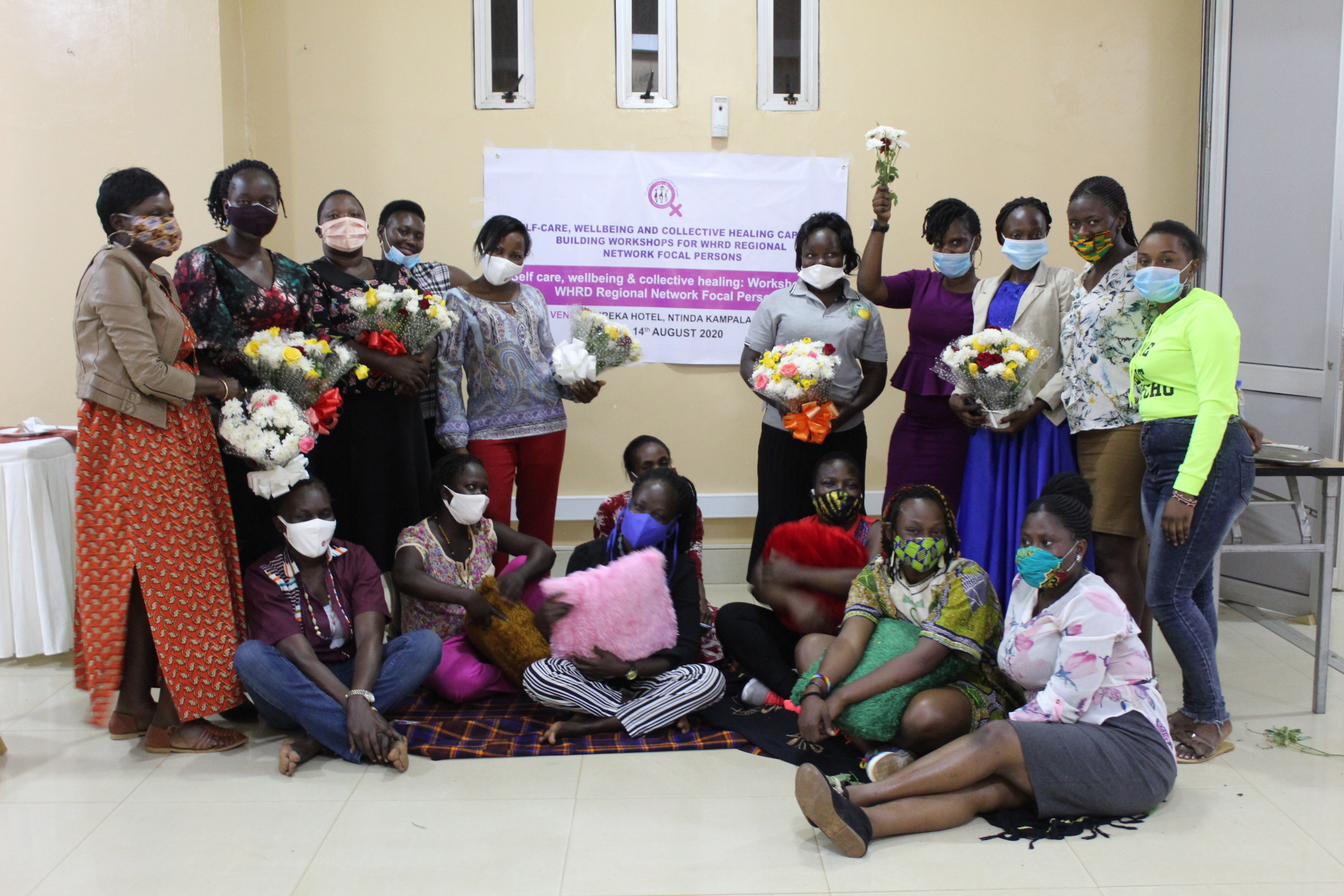
The Women Human Rights Defenders Network Uganda, with support from Urgent Action Fund For Africa organised a 4 (four) day Self Care, Wellbeing and Collective Healing Capacity building Workshop for two groups of Women Human Rights Defenders Thematic Action groups. The first workshop comprising of representatives of the thematic working groups run from August 11th-12th 2020, and the second group comprised of regional focal persons, run from 13th-14th August 2020 at Eureka Place Hotel Ntinda.
The workshop was aimed at creating a relaxed and soothing environment where Women Human Rights Defenders would focus on their well being and come together to collectively heal from all the trauma and stress that comes along with their work.


Messages of encouragement, self belief and self love were re-echoed by the Women Human Rights Defenders to collectively heal together as they talked about dealing with trauma. It is important to heal one self before helping others, is what they unanimously agreed to while listening to each others stories.
Dr Linda Birungi, a gynecologist from Reproductive Health Uganda led sessions discussing sexual reproduction, family planning and best health practices. Health risks and dangers like cervical and breast cancer were discussed at length to ensure Women Human Rights defenders seek treatment and help before developing complications while working.


Mildred Apenyo, a woman’s rights activist and C.E.O of Flitclique Africa , an organization empowering and creating safe spaces for women, conducted therapy and relaxation sessions with Women HRDs to release fatigue from their bodies. Candles, ornaments, yoga and exercises were some of the tools and routines they were taken through as part of their healing.
A masseuse was also invited to massage and sooth body muscles to release any kind of stress and fatigue on the body. A healthy body is a healthy mind, so it is important for Women Human Rights Defenders to have healthy bodies to continue with their work without difficulty.
The workshop was concluded by officially launching a new culture of activism that is rooted in Practical Self-Care and mutual support as a necessary condition of Women’s movement in Uganda.

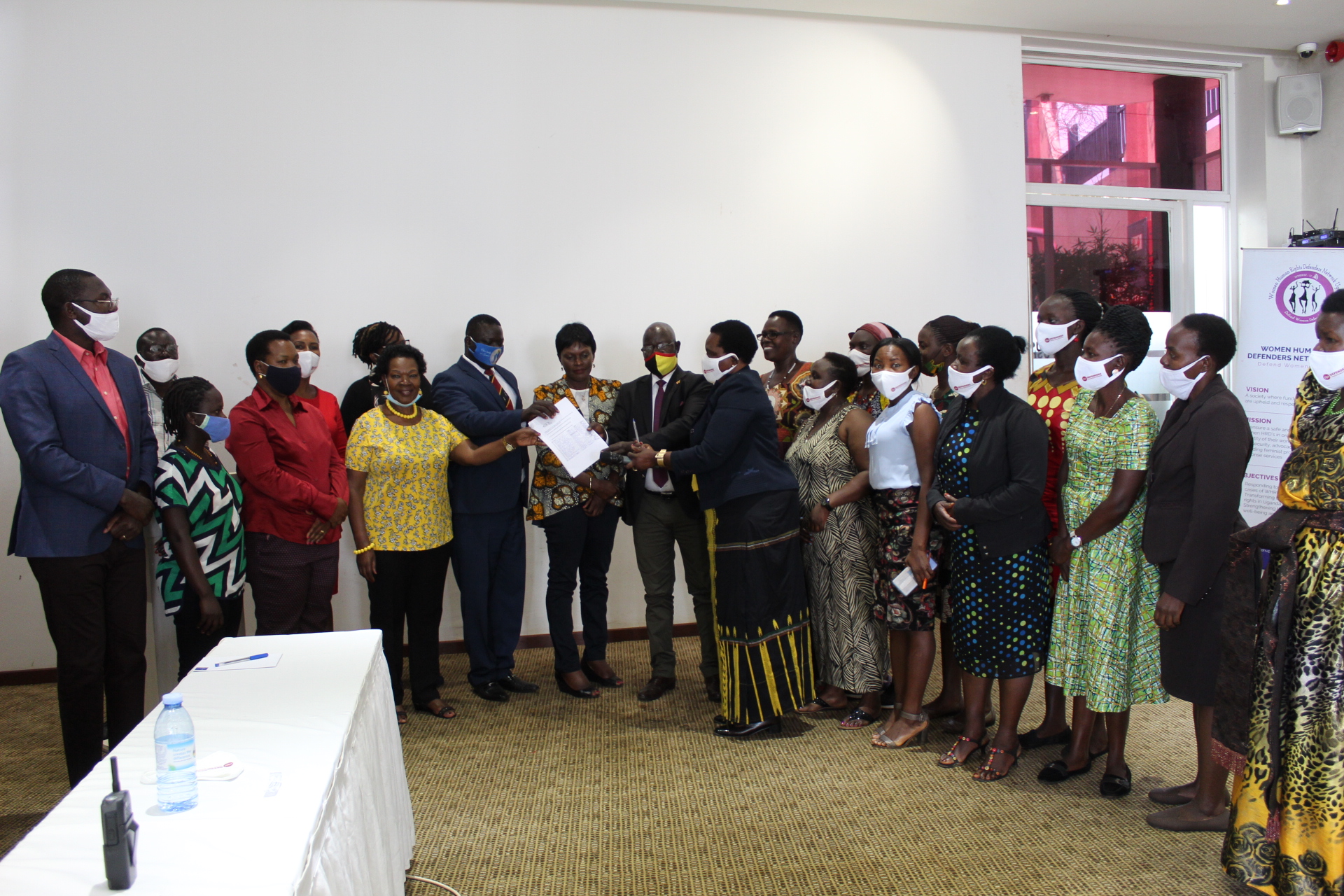
On August 13th 2020, Defenders Protection Initiative held a Consultative meeting at Skyz Hotel on the proposed Human Rights Defenders Protection Bill. The mover of the bill Hon. Komakech Lyandro in his opening remarks emphasized the the law will consolidate the struggle Women Human Rights Defenders go through and create an enabling environment for women to flourish.
More opening remarks from Hon. Komakech Lyandro. #HRDProtectionBill2020 pic.twitter.com/cSBbTxbdoY
— Women Human Rights Defenders Network- Uganda (@WHRDNU) August 13, 2020
Brenda Kugonza, the Executive Director of the Women Human Rights Defenders Network Uganda, presented a position paper by Women Human Rights Defenders on the need and relevance of a gender perspective in the Human Rights Defenders Protection bill. “Women’s unique issues and concerns while protecting rights of others should be put into full consideration as the bill is drafted.”

Rights of all individuals should be respected and reflected in the bill to ensure equal leveled ground while carrying out work. Women Human Rights Defenders across all regions from the country gave accounts of the different violations and threats they face while working.
Brenda Kugonza- It’s important Women HRDs voices and plight are put into consideration while drafting the #HRDProtectionBill 2020 pic.twitter.com/owlzJKti2t
— Women Human Rights Defenders Network- Uganda (@WHRDNU) August 13, 2020


John Tamale Mirundi, a Senior legislative council and drafter of the bill committed to ensuring all gender aspects are catered for in the Human Rights Defenders Protection Bill 2020.
Mr John Tamale Mirundi, a Senior Legislative and Drafter of the #HRDProtectionBill2020 commits to considering all gender aspects in drafting the bill. pic.twitter.com/YHwghFeIpF
— Women Human Rights Defenders Network- Uganda (@WHRDNU) August 13, 2020
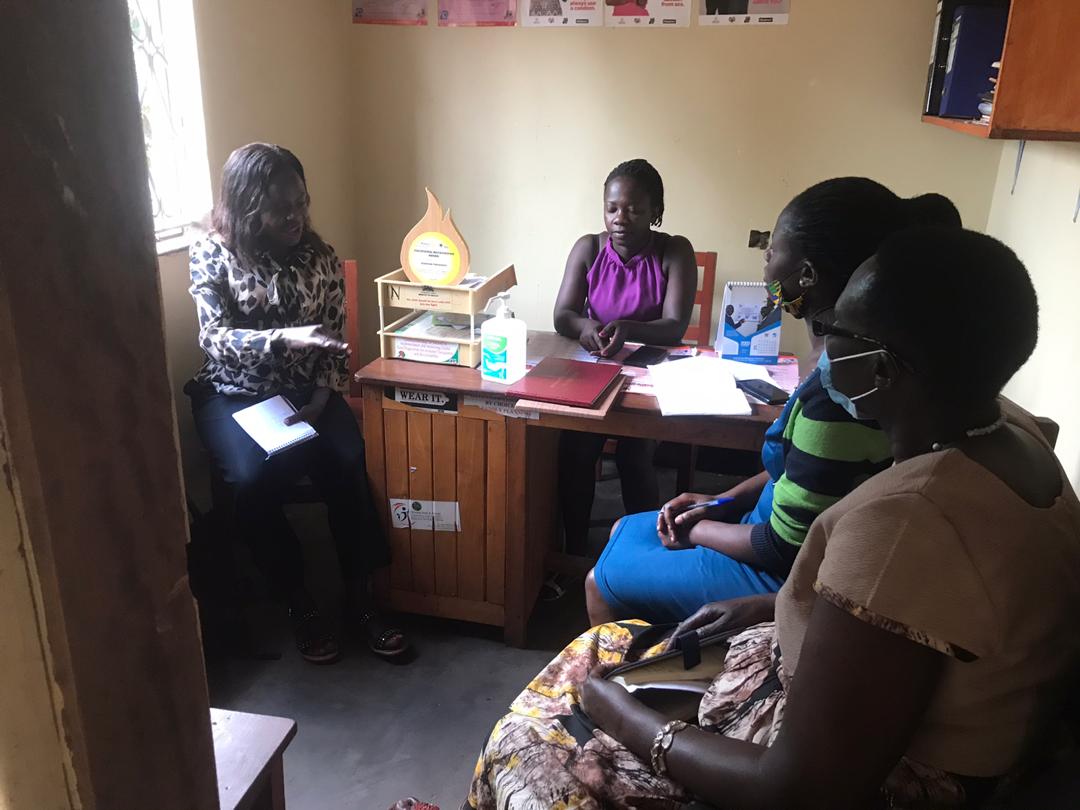
The WHRDN-U has continued amplifying the voices of Women Human Rights Defenders at all levels during the COVID-19 pandemic. We have submitted to the UN Humans Rights Office stories of frontline defenders, press statements, virtual networking, advocacy meetings and continued support to WHRDS at risk.
We also conducted solidarity visits to WHRDs in danger and provided referral services to WHRDs to access services from like minded organizations. WHRDN-U will continue amplifying the voices of WHRDs and remain committed to provide support to those at risk during and post the COVID-19 pandemic.


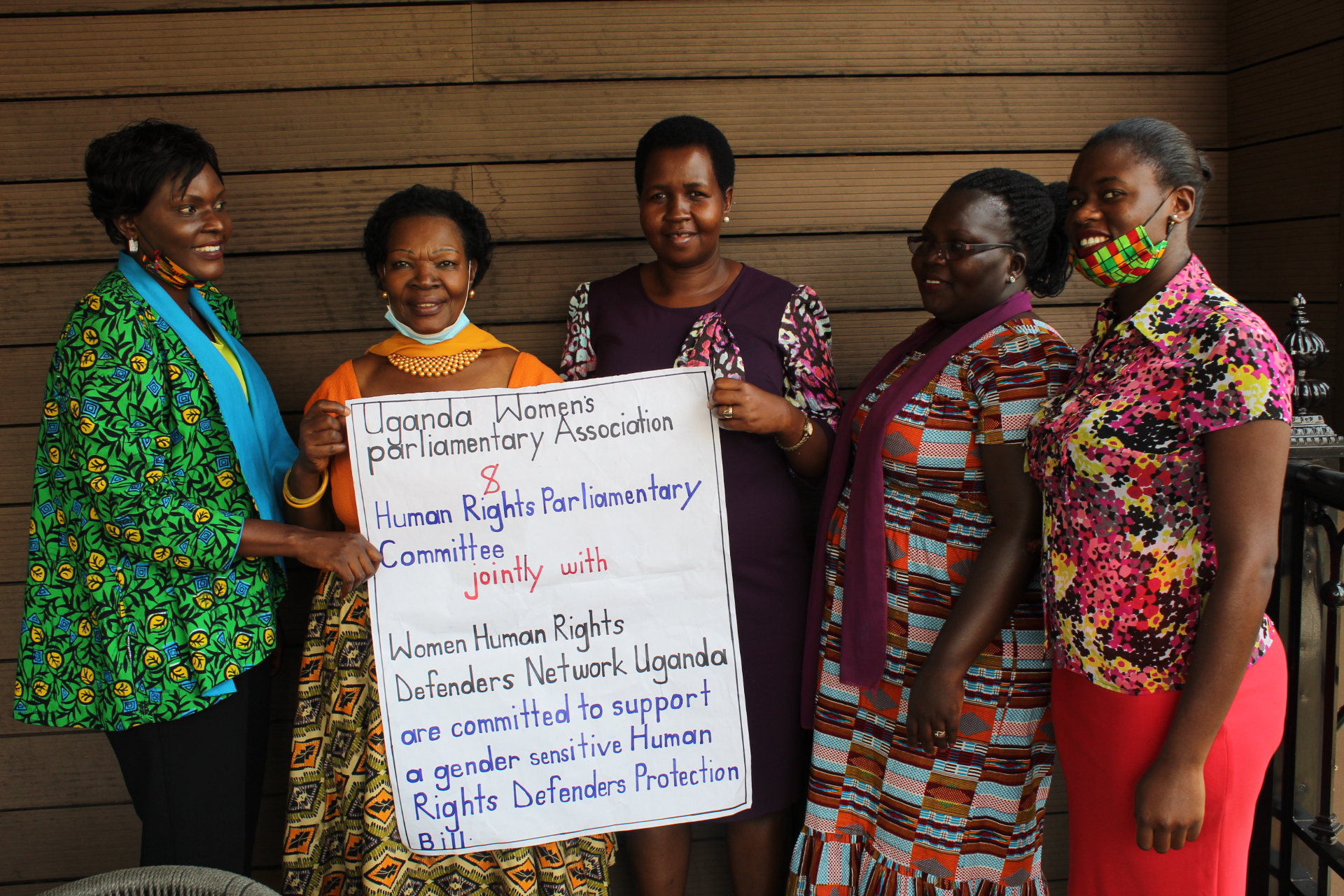
On July 30th 2020, Brenda Kugonza the Executive Director of Women Human Rights Defenders Network Uganda, together with the Assistant Protection and Rapid Response Manager, Jane Sssenyange met with Hon Lucy Akello, Hon Jovah Kamatek and Mary Harriet Lamunu, program coordinator from Uganda Women Parliament Association to discuss the proposed Human Rights Defenders protection bill and how it can be gender responsive.

It is important to WHRDN-U that Women Human Rights Defenders are well represented in this bill, and this was central to the discussions held. Hon Lucy Akello, who sits on the Human Rights Parliamentary committee welcomed the idea of ensuring women’s voices and rights are well respected in drafting the bill.
Mary Lamunu, welcomed the timely intervention and discussion and emphasized the need for WHRDs issues to be well laid out in the bill. The discussion held resulted in the members agreeing to champion this cause going forward in Parliament.
The COVID-19 pandemic has affected many sectors and notably too, the work of Women Human Rights Defenders in Uganda. Brenda Kugonza, the Executive Director of Women Human Rights Defenders Network Uganda, with other members of the network analyzed the effect the pandemic has had on WHRDs in a 2 page feature in the Daily Monitor. Read full article here.

UN Headquarters, New York 26 July 2018
Panelists/moderators:
Ivana Radačić, Chair, UN Working Group on discrimination against women in law and in practice
Michel Forst, UN Special Rapporteur on the situation of human rights defenders
Andrew Gilmore, Assistant Secretary-General for Human Rights, Head of OHCHR New York Office
Lolita Chavez, Council of the Kiché People (Consejo de Pueblos Kiché Guatemala)
Lydia Alpizar, Mesoamerican Women Defenders Initiative
Brenda Kugonza, Uganda Women Human Rights Defenders Network (Uganda)
Asha Kowtal, All India Dalit Women’s Rights Forum (India)
Marusia Lopez, Jass (Just Associates)
Guadalupe Marengo, Amnesty International
Alda Facio, UN Working Group on discrimination against women in law and in practice
Pooja Patel, International Service for Human Rights
Miriam Miran, OFRANEH (Honduras)
Mélanie Sonhaye Kombate, West-African Human Rights Defenders Network (Togo)
____________________________________
Main issues raised:
Participants called attention to the particular situation of risks and vulnerability faced by women human rights defenders (WHRDs), especially those working on environmental issues, the rights of minorities, including indigenous and dalit people, LGBTI rights, and sexual and reproductive health and rights (SRHRs). Specific challenges facing WHRDs include: physical assaults, denial of medical treatment, degrading searches, threats to their families and communities, public defamation and attacks against their “honor”, media attacks against their physical appearance, arbitrary detention, sexual and gender-based violence, and killings. WHRDs are also at risk of being rejected by their communities and of being revictimized if they report acts of violence.
All panelists and several other WHRDs from the Philippines, Brazil, Indonesia, Colombia and Spain attending the event testified about the challenges they have encountered as WHRDs. These range from structural gender-based discrimination, surveillance, breaking in, criminalization and arrests, to kidnappings and assassination attempts.
Overall, participants insisted on the need to address the growing impact of religious extremism and corporations (in particular extractive industries) on WHRDs. Calls were also issued to tackle the structural causes of discrimination against women, regressive trends with regards to the rights of women (particularly through the rise of an anti-rights discourse in Eastern-Europe and Latin-America), the shrinking of civil society space as well as sexism and misogyny, including within the human rights movement. In this regard, participants underscored the need to adopt an intersectional approach to the protection of WHRDs, tackle impunity and ensure that risk analysis and protection mechanisms include a gender perspective. There were also calls for bottom-up, creative and long-term mechanisms aimed at better protecting WHRDs.
Serious concerns were expressed about the record number of reprisals against WHRDs in 2017 which led to the UN’s growing engagement in the protection of WHRDs against reprisals, including the SG annual report on cooperation with the UN, more frequently referred to as the “reprisals report”. For the first time, this report will be presented to the Human Rights Council. Reference was made to OHCHR’s important contribution in ensuring the inclusion of WHRDs in the Outcome Document of the 2018 Commission on the Status of Women (CSW).
Key recommendations for States:
Recognize and support the work of WHRDs, in particular by granting political and legal recognition to their work
Recognize that WHRDs include women working for NGOs, labor rights, land rights, cultural rights, SRHRs, collective rights and grassroots movements
Strengthen protection mechanisms and programs by:
Adopting legislations, policies and programs focused on eliminating the structural causes of violence against WHRDs
Preventing, investigating and punishing the perpetrators of abuse and violence
Ensuring that the implementation of provisions for protection, redress and remedy adopt an intersectional approach
Ensuring that protection legislations and mechanisms do not re-victimize WHRDs
Reviewing and repealing policies and practices that are not in line with international human rights standards, including laws that restrict CSOs space
Ensuring the financial sustainability of protection programs
Domesticating the UN Declaration on HRDs
Ensuring that official protection mechanisms do not contradict or hinder the holistic, spiritual, and collective protection practices and measures that WHRDs depend on
Ensuring that legislations, policies or legal frameworks do not use personal and privileged information from or about WHRDs and their organizations
Strengthen access to justice and end impunity by:
Accelerating investigations for cases of violence against WHRDs
Ensuring that investigations are free from sexist and misogynistic prejudices and stereotypes
Ensuring that investigations integrate an analysis of the context, the patterns of attacks and the socio-environmental conflicts that frame those attacks
Holding public officials, media, religious, cultural, community and business leaders accountable for attacking, defaming, inciting violence and stigmatizing women
Enforcing stringent measures against state armed forces that harm or inflict violence on HRDs
Strengthening the proactive role of independent public human rights and judicial institutions in the prevention and investigation of violence against WHRDs
Training officials, especially those in the judicial and penal system
Creating mechanisms that ensure that political appointments, promotions to public office or advancement of political careers take officials’ histories in relation to WHRDs into account
Ending extractive, agro-industrial, infrastructural and hydro-energy projects that were started without the free and informed consent of affected communities
Strengthen the implementation by States of their human rights obligations
Improve the coherence between international instruments
Invite UN Special Rapporteurs and other Special Mechanisms for visits
Facilitate cooperation between regional and international levels
Key recommendations for UN entities:
Strengthen technical assistance provided to States to implement UN recommendations
Adopt an intersectional approach to HRDs in all aspects of the Organization’s work
Ensure effective follow-up, implementation and accountability in collaboration with regional human rights mechanisms
Strengthen the participation of WHRDs in UN bodies, processes, meetings, country visits, etc.
Ensure a safe space for CSOs at the UN and denounce all acts of reprisals at the highest level
Strengthen country-level coordination amongst UN entities in supporting the implementation of UN recommendations
Monitor the adoption and implementation of legislations that legitimize or criminalize WHRDs
Adopt a holistic approach to protection measures
Urge private companies to improve how they identify, address and prevent violence and abuse against HRDs
SOURCE : https://www.ohchr.org/EN/Issues/Women/WGWomen/Pages/StatesResponsibilityTowardsProtection.aspx